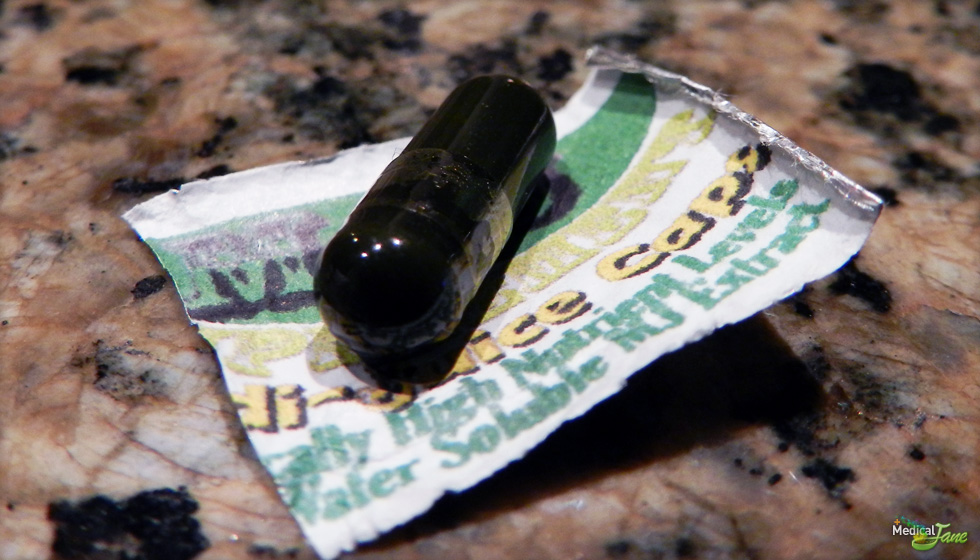
MJ Caps Have High Amounts of THC & CBD
An Extremely Easy Way of Ingesting Concentrated Cannabis Oil All I need is a glass of water to get the maximum benefit from this medicating session. Good thing too, because I am not sure my sore throat could handle smoking or vaporizing anything right now. When I came down with a cold this winter, the last thing that comes to mind is to buy bud and light it up. Instead, my initial reaction is to go to the dispensary and look for edibles or concentrates that can be ingested into my system rather than being heated. As you …

Cannabinoids & Breast Milk: Do Cannabinoids Play A Larger Role In Our Life Than We Thought?
Research into the workings of the endocannabinoid system has yielded significant discoveries for scientists attempting to learn more about pre and post-natal development. It is apparent that endocannabinoids, chemical compounds produced in the body that are similar to the psychoactive ingredients in marijuana, act as a catalyst for early embryonic development and development thereafter into maturity. The same compounds have also been found at incredibly high concentrations in maternal breast milk, suggesting that cannabinoids are more important to our successful growth than was ever thought before. All Humans Are Born With Cannabinoid Receptors The European Journal of …
Lab-Testing Cannabis: What You Should Know
Should patients expect dispensaries to test their cannabis? The simple answer is yes. After all, would you ever accept your primary care physician handing you an unlabeled bottle of pills and telling you, “Good luck, hope this helps!” You would have no way of knowing how much to consume or how it would affect you. Of course, nobody has ever overdosed on Cannabis (physically impossible), but the safety requirements and care that goes into the finished products should be no different. In addition, lab testing would provide information on contaminate, fungus and moisture levels in cannabis in order to ensure …
An Introduction To Marijuana Edibles: What You Should Know About Ingesting Cannabis
With all the options available to medical marijuana patients today, many are choosing to explore methods of medicating beyond the traditional pipe or paper. Marijuana infused products, commonly referred to as ‘edibles’, provide another option to patients who cannot, or choose not to smoke their cannabis. Edibles come in many different varieties, including tinctures (alcohol and glycerin based extractions), cooking oils, premade desserts, drinks, snack foods, candies, and even chewing …
Cannabinoids May Help in Managing Asthma-Related Symptoms
What Is Asthma? Asthma is one of the most ubiquitous chronic inflammatory diseases in the U.S., affecting an estimated 35 million people, and claiming the lives of 4,000 each year. The disease is typically caused by inflammation of the bronchial tubes, causing the chest to feel tight and breathing to become difficult. Symptoms include wheezing, coughing (especially at night), shortness of breath, and pain or pressure in the chest. While not every case of asthma is identical, the treatments for all cases are similar. Current Methods of Treating Asthma Patients Anti-inflammatory drugs are the most popular treatment …

How to Become a Valid Medical Marijuana Patient in California
Updated (August 8, 2018) – Several laws were recently changed that directly impacted California’s Medical Marijuana Program. Click here to learn more. — How Do I Get Medical Marijuana? The laws that outline how to become a medical marijuana patient vary by state. In California, Proposition 215 allows medical use of cannabis for qualified patients. Like most states where medical marijuana is legal, to be considered a patient you must obtain a valid doctor’s recommendation. Furthermore, some states request you apply to a state medical marijuana program and receive a medical marijuana identification card, …

Rick Simpson’s Oil: Natural Treatment For Cancer Using Concentrated Cannabis Oil
Who is Rick Simpson?
Rick Simpson is a medical marijuana activist who has been providing people with information about the healing powers of cannabis oil medications for nearly a decade. Rick cured himself of a metastatic skin cancer back in 2003. Since then, he has devoted his life to spreading the truth about cannabis oil. Despite his progressive work with cancer patients, Rick Simpson has met an absurd amount of opposition from Canadian authorities, as well as pharmaceutical companies, government/health agencies, and UN offices, despite his claims to have successfully treated over 5,000 patients (free of charge). He believes that it is common to have all types of cancer and diseases cured with the use of high quality cannabis oil as the main method of treatment.
Rick has reported treating patients with all types of conditions including, but not limited to, cancer, AIDS / HIV, arthritis, multiple sclerosis, diabetes, leukemia, Crohn’s disease, depression, osteoporosis, psoriasis, insomnia, glaucoma, asthma, burns, migraines, regulation of body weight, chronic pain, and mutated cells (polyps, warts, tumors).
For years, Rick Simpson has spread his message that cannabis can be used to treat different types of cancer, that is... as long as you are willing to take the legal risks associated with the treatment. Although Rick’s work has been a recent public revelation, the technique he uses to make cannabis oil has been well known for quite a long time. Rick has taught people to reduce the plant matter in a solvent solution (e.g. alcohol), concentrating the cannabinoids to make “Rick Simpson Oil," commonly referred to as RSO. Part of the Rick Simpson revelation was that to treat serious medical conditions, you have to eat this gooey extract or apply it directly to your skin rather than smoke it.
Dosing Suggestions
The taste of whole plant cannabis oil (including Rick Simpson Oil) is typically earthy, bitter, and reminiscent of chlorophyll. The best way to ingest cannabis oil is to tack the dosage on your lower gum line and let it dissolve on its own within a few minutes, much like you would any infused sublingual. As you start to increase your dosage over time, you will begin to get more and more familiar with the flavor of cannabis oil and it will become less of an obstacle to take your meds.
Remember: Concentrated cannabis oil is a very potent medicine. It must be treated as such. Never take more than the recommended dosage until you absolutely know how Rick Simpson Oil affects you.
It usually takes the average person about 90 days to ingest the full 60 gram or 60 ml oil treatment.
The Rick Simpson method recommends people start with three doses per day, each dose about the size of a half a grain of short grained dry rice. The patient should take this dosage every 8 hours: early in the morning, again in the afternoon, and then they should take their final dose of the day, about an hour before bedtime. It should also be noted that as a patient begins to ingest this oil, the patient does not normally feel the effect of the oil until about an hour after they have taken their dosage. A beginner’s dose as described would equal about ¼ of a drop.
After four days at this dosage (taken three times a day), most people are then able to increase their doses by doubling the amount of their dosage every four days.
By following this simple procedure, many patients have reported that they did not experience the high, which this oil can cause. But in truth no two people are the same and we all have different tolerances, so some will naturally be able to up their dosages more quickly than others. In reality, even if one does become what is commonly referred to as "high," this will not harm them in any way as long as the oil was properly made. This is especially true if the oil being ingested was produced from sedative Indica-dominant strains of cannabis (as opposed to heady sativa strains).
An average person takes anywhere from 3 to 5 weeks to get to the point where they can ingest 1 gram or 1 ml of oil per day.
Once patients reach this dosage they can continue at this rate until their medical issues are brought under control. By this point, patients tend to build a tolerance for ingesting the oil, making it much easier to consume larger quantities at a time. Note: Children often take the same dosage as adults with no detrimental effects, although you should always consult with your healthcare physician first.
How to Make Rick Simpson Oil
To make Rick Simpson Oil (RSO), start with one ounce of dried herb. One ounce will typically produce 3-4 grams of oil, although the amount of oil produced per ounce will vary from strain to strain. A pound of dried material will yield about two ounces of high quality oil.
IMPORTANT: These instructions are directly summarized from Rick Simpson’s official website. Cannabis extractions should always be performed by a licensed professional. If you are venturing to try this extraction process yourself, you will need to be extremely careful when boiling solvents off as the entire process is extremely flammable. AVOID smoking, sparks, stove-tops, heat guns, and red hot heating elements. Set up a fan to blow fumes away from the pot, and set up in a well-ventilated area for whole process.
Place the completely dry material into a clean bucket.
Dampen the material with the solvent you are using. Many solvents can be used (although it is recommended that you avoid petroleum solvents). You can use ethanol, butane, 99% isopropyl alcohol, or even water. Two gallons of solvent is required to extract the THC from one pound, and 500 ml is enough for an ounce.
Crush the plant material using a stick of clean, untreated wood or any other similar device. Although the material will be damp, it will still be relatively easy to crush up because it is so dry.
Continue to crush the material with the stick, while adding solvent until the plant material is completely covered and soaked. Remain stirring the mixture for about three minutes. As you do this, the THC is dissolved off the material into the solvent.
Pour the solvent oil mixture off the plant material into another bucket. At this point you have stripped the material of about 80% of its THC.
Second wash: again add solvent to the mixture and work for another three minutes to extract the remaining THC.
Pour this solvent oil mix into the bucket containing the first mix that was previously poured out.
Discard the twice washed plant material.
Pour the solvent oil mixture through a coffee filter into a clean container.
Boil the solvent off: a rice cooker will boil the solvent off nicely, and will hold over a half gallon of solvent mixture. CAUTION: avoid stove-tops, red hot elements, sparks, cigarettes, and open flames as the fumes can be extremely flammable.
Add solvent to rice cooker until it is about ¾ full and turn on HIGH heat. Make sure you are in a well-ventilated area and set up a fan to carry the solvent fumes away. Continue to add mixture to cooker as solvent evaporates until you have added it all to the cooker.
As the level in the rice cooker decreases for the last time, add a few drops of water (about 10 drops of water for a pound of dry material). This will help to release the solvent residue, and protect the oil from too much heat.
When there is about one inch of solvent-water mixture in the rice cooker, put on your oven mitts and pick the unit up and swirl the contents until the solvent has finished boiling off.
When the solvent has been boiled off, turn the cooker to LOW heat. At no point should the oil ever reach over 290˚ F or 140˚ C.
Keep your oven mitts on and remove the pot containing the oil from the rice cooker. Gently pour the oil into a stainless steel container
Place the stainless steel container in a dehydrator, or put it on a gentle heating device such as a coffee warmer. It may take a few hours but the water and volatile terpenes will be evaporated from the oil. When there is no longer any surface activity on the oil, it is ready for use.
Suck the oil up in a plastic syringe, or in any other container you see fit. A syringe will make the oil easy to dispense. When the oil cools completely it should have the consistency of thick grease.
Rick Simpson Oil vs. CBD Oil
Rick Simpson Oil (RSO) can easily be confused with cannabidiol oil (otherwise known as CBD oil). Along with the massive medicinal benefits of CBD oil, RSO also contains THC and other key cannabinoids resulting in users having a much more euphoric medicating session than if they took CBD oil on its own (which is not psychoactive). Research has found tetrahydrocannabinol (THC) to offer very promising therapeutic benefits for many conditions. This is one of the reasons most patients prefer whole plant cannabis oil like RSO over individual cannabinoid oils like CBD oil.
Buyer Beware!
The only way to know that you have the real thing is to produce the proper oil yourself. There are many criminals who say that they are producing Rick Simpson Oil (RSO) using Rick's name. Rick Simpson has no connection with these suppliers and he has no involvement with the "Phoenix Tears Foundation" from the U.S., although there is a link on their web site which leads to his web site and Facebook page. Please note: This foundation is different than phoenixtears.ca -- Rick Simpson's official website.

Cannabis: The Forbidden Medicine With Health Benefits You Will Not Hear About On The News
You might think that if scientists found a cure to cancer it would be a huge story… right? It would make the top story during prime-time news of every major television network, as well as the headline of every newspaper across the country. The person who found the cure would be a hero and the world would be celebrating… Then why hasn’t that happened? Cannabinoids Proven To Inhibit Tumor Growth A study done in Madrid, discovered that the cannabinoids in marijuana inhibit tumor growth. The experiments in 2000 were conducted by Manuel Guzman, and concluded that THC …

Juicing Cannabis: The Potential Health Benefits of Treating Cannabis Like a Vegetable
Donald Abrams is chief of Hematology Oncology, at San Francisco General Hospital, and a professor of medicine at the University of California, San Francisco. He does research on the applications of medical cannabis, and has become an advocate as a result. Abrams stated, “If cannabis were discovered in the Amazon rainforest today, people would be clambering to make as much use as they could of all of the potential benefits of the plant. Unfortunately, it carries with it a long history of being a persecuted plant.” Abrams appears in the short film that accompanies this …

Medical Marijuana in the Management of Autism
As autism becomes more prevalent in the United States, there is a growing need for alternative treatments. Currently prescribed drugs simply do not work for some, and more parents have been turning to medical marijuana to ease their children’s symptoms. While no double-blind study has been done on the effect of marijuana and autism, UC Irvine (UCI) is dedicated to studying the disorder. Medical Marijuana Gaining Popularity Among Autistic Patients With funding from the William & Nancy Thompson Family Foundation and the Children & Families Commission of Orange County, UCI created the Center for …